
Solar
Getting Your Aircon Summer-Ready: A Pre-Season Checklist
The worst time to find a fault is the first 38-degree day. A spring check-up — half of it DIY — keeps your system ready before the heat arrives.
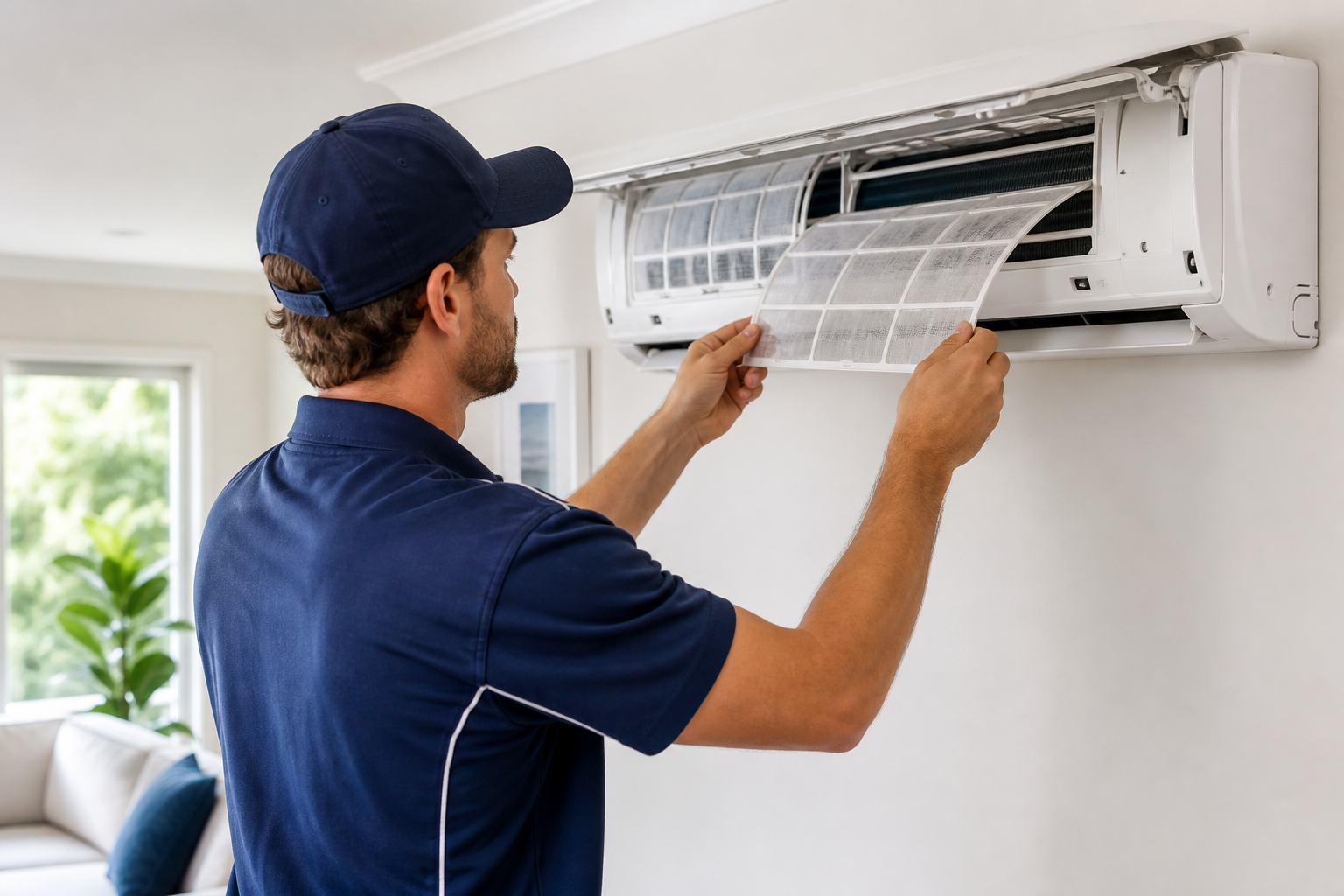
Every summer follows the same script: the first serious heatwave lands, thousands of air conditioners get switched on for the first time in months, a percentage of them fail, and every technician in Victoria is suddenly booked out for a fortnight. The households that sail through are the ones that checked their system in spring. Here is what that check involves — and how much of it you can do yourself.
Start with the filters
This is the single highest-value ten minutes in home maintenance. Pop the front cover of your wall unit, slide out the mesh filters, and look at them against the light. If you can't see through them, neither can your airflow. Wash them in warm water, let them dry completely in the shade, and refit. For ducted systems, the return-air grille filter — usually in a hallway ceiling or wall — gets the same treatment. Clogged filters make the system work harder, cool less, and cost more every hour it runs.
Give the outdoor unit breathing room
Your condenser needs to shed heat, and it can't do that buried in garden. Clear leaves, cobwebs, grass clippings and anything stacked against it, leaving clear space on all sides. Check the fins on the coil: if they are matted with dust or fluff, a gentle rinse with a garden hose (power off first) helps. Never use a pressure washer — the fins bend easily and bent fins choke airflow permanently.
Run a test on a mild day
Don't wait for 38 degrees to discover a problem. On a warm spring day, run the system in cooling mode for a solid half hour. You are checking three things: air from the vents feels properly cold, the outdoor unit runs without rattles or grinding, and no water drips where it shouldn't. A musty smell on start-up, weak airflow from one zone, or an indoor unit that drips down the wall are all early warnings worth acting on while technicians still have appointments free.
What to leave to a professional
Refrigerant levels, electrical connections, capacitor health, drain line clearing and coil deep-cleaning belong to a licensed technician — refrigerant handling is legally restricted, and for good reason. A professional pre-season service typically takes under an hour and catches the failures-in-waiting: a capacitor at end of life, a drain about to block, a coil so dirty the system can't reach temperature. Booked in September or October, it costs a standard service fee; discovered in January, the same fault means days of sweltering and premium call-out pricing.
Put it in the calendar: filters and outdoor unit yourself in early spring, professional service every year or two. Your future January self will thank you.