
Solar
Air Quality and Your Aircon: Filters, Allergens and Melbourne Pollen
Melbourne's pollen season is among the worst in the world. Used well, your air conditioner is a genuine ally for allergy sufferers — here is how.
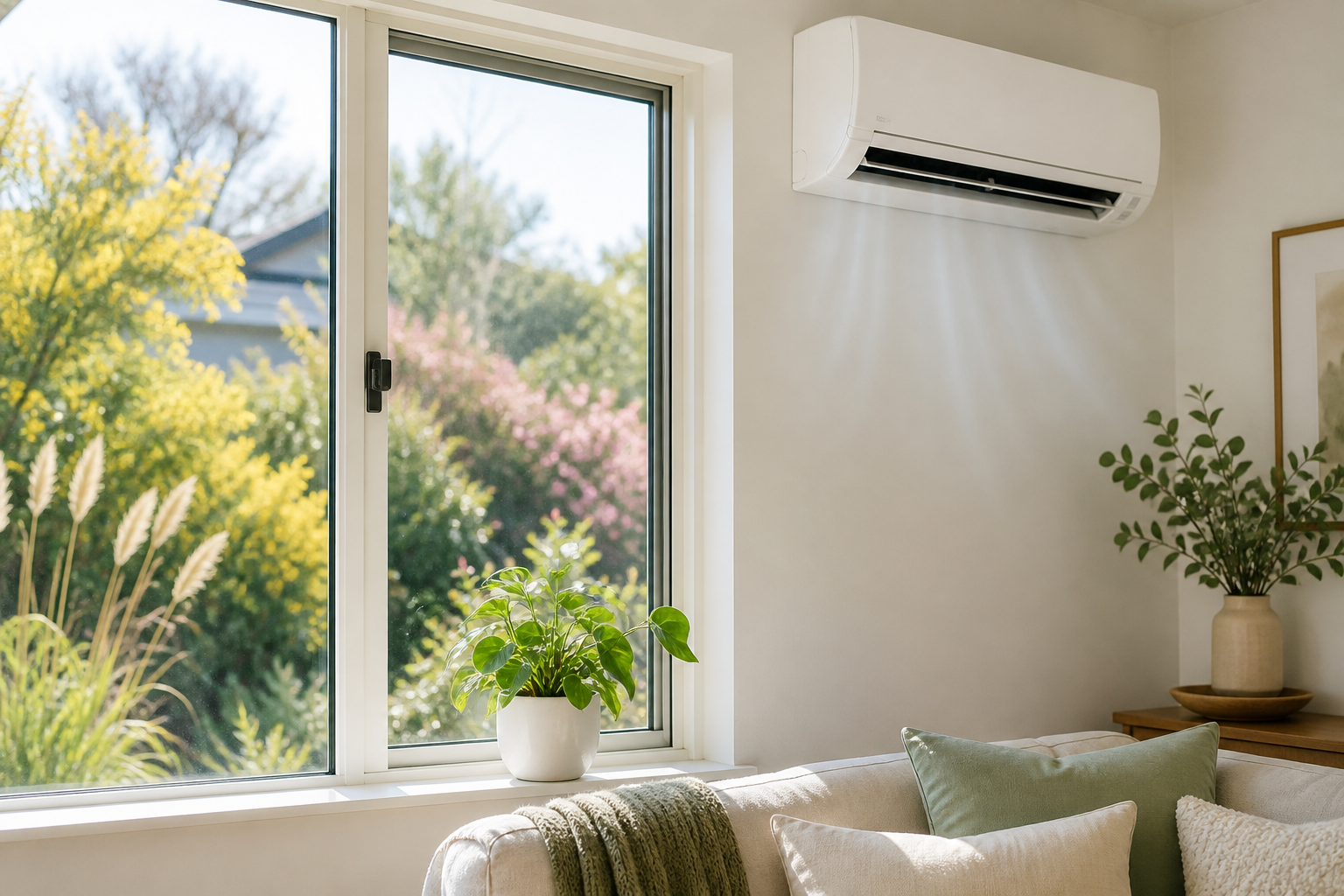
Melbourne has an unwanted claim to fame: it is one of the allergy capitals of the world. Every spring, rye grass pollen from the pastures north and west of the city rides the wind into the suburbs, and hay fever season begins. For the one in five Victorians who suffer, the indoor air at home matters enormously — and your air conditioner plays a bigger role in it than most people realise.
What your aircon actually filters
Every split system and ducted unit passes indoor air through a filter before conditioning it. The standard mesh filter is designed mainly to protect the machine, catching dust and lint — but it also traps a share of the larger airborne particles, including pollen grains, pet dander and dust-mite debris, on every pass. Because an air conditioner recirculates the same indoor air many times an hour, even a basic filter steadily strips particles out of circulation, provided it is clean enough to keep airflow moving.
The recirculation advantage on high-pollen days
Here is the practical trick allergy households should know: on high-pollen days, a home that keeps windows shut and runs the air conditioner is constantly cleaning its own air, while a home relying on open windows is importing fresh pollen with every gust. Check the pollen forecast the way you check the weather. When it is high or extreme, close up, run the system, and let recirculation do its work. The same approach applies during smoke events, when fine particles make outdoor air genuinely unhealthy.
Upgrading beyond the standard filter
If someone in the house has asthma or serious hay fever, it is worth asking about higher-grade filtration. Many indoor units accept optional electrostatic or fine-particle filters that capture much smaller particles than the factory mesh. Ducted systems can often be fitted with upgraded return-air filters too. There is a trade-off to respect: denser filters resist airflow more, so they must be matched to the system rather than simply stuffed in — an undersized filter choking a unit creates new problems while solving old ones.
A dirty filter makes everything worse
The flip side is important. A filter loaded with months of dust stops being a cleaner and becomes a reservoir — microbes and trapped allergens sitting directly in your airstream, often announcing themselves as a musty smell at start-up. Through pollen season, washing split-system filters every four to six weeks is a realistic rhythm for an allergy household. It takes ten minutes and costs nothing.
Combined with a periodic professional clean of the indoor coil, where dust and moisture otherwise accumulate, these habits turn your air conditioner into a quiet piece of health equipment. If allergies rule your spring, tell us — filtration options are something we are always happy to walk through.